About
What kind of world do we want to grow? And what do we need to seed for it to take root?
Our Story
La Bolina understood social change as a deeply interconnected process: personal, communal, and systemic.
Our approach was rooted in lived experience, and committed to slow, relational, and grounded processes that placed people—not just outcomes—at the heart of transformation.
We didn’t intervene from the outside. La Bolina was embedded in the territory, building from within through trust, listening, and mutuality. When we realised that many migrants didn’t want to live in depopulated areas without basic services, the project adapted: we relocated, rethought, and acted—guided by active listening and real contextual analysis.
Radical & relational Approach to change
Regenerating Land – Regenerating Lives.
A way of life
Agroecology, social arts, community-building, regeneration…
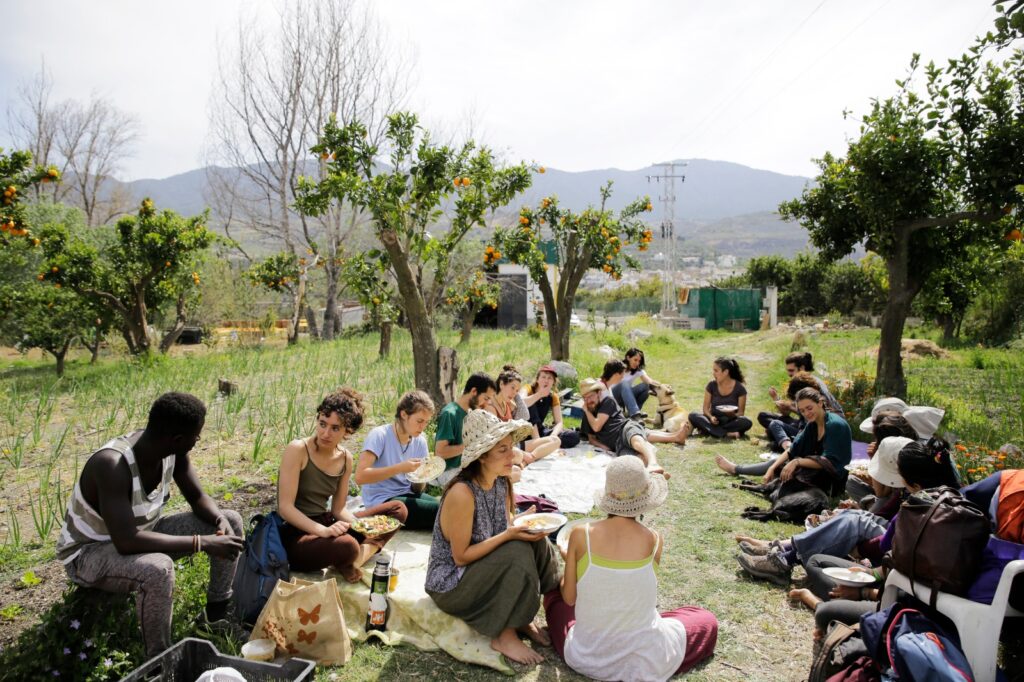
For us, agroecology was never just a growing method. It was a way of life: a practice that regenerated both soil and human connection. But we didn’t romanticise rural life. We confronted structural barriers head-on: lack of land access, funding, labour rights, or fair markets. That’s why La Bolina combined practice and advocacy—planting, storytelling, creating spaces for dialogue and research to make visible these limitations and seek collective solutions.
Artivism was another core pillar. Through theatre, embodiment, imagery, and shared experience, we created spaces of encounter between different worlds. Social theatre workshops, participatory events, and creative residencies became real sites of integration—not imposed, but co-created. We welcomed local and international volunteers from around the world, using lived experience as a tool for awareness and advocacy.
Our methodology was never linear or rigid. It was alive, affective, and experimental. We worked with what gave us energy: care, courage, mistakes, learning. Training, mentorship, solidarity economies, and everyday acts of justice wove the fabric of our path.
Another key pillar was community-building: radical friendship and a deeply communal approach, rather than an institutional one. It meant asking ourselves again and again:
What kind of world do we want to grow? And what do we need to seed for it to take root?